
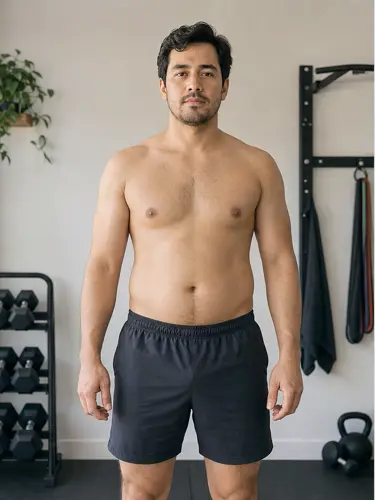

Most people who’ve tried to lose body fat have experienced the same maddening sequence: start a diet, lose a few pounds, hit a wall, get hungry all the time, eventually quit. They blame themselves. They think they need more willpower or a stricter plan. But the actual culprit is usually the diet design itself — specifically, the way it handles two variables that control hunger more than almost anything else: protein and fiber.
Getting these right doesn’t guarantee abs, but getting them wrong almost guarantees failure. Here’s what the research actually says about how to eat your way to a calorie deficit without feeling like you’re starving through every meal.
Why Protein Is the Anchor of Any Fat Loss Diet
Protein does three things that no other macronutrient does as effectively. It’s the most satiating macro per calorie, meaning a gram of protein will keep you fuller longer than a gram of carbohydrate or fat. It has the highest thermic effect — your body burns more calories just processing it. And it preserves lean muscle tissue during a caloric deficit, which matters enormously for how your body composition looks as the fat comes off.
The practical implication: if you’re in a calorie deficit and your protein intake is low, you’ll lose muscle alongside fat. You’ll end up lighter on the scale but not leaner — just a smaller version of roughly the same shape. For most people trying to reveal their abs, muscle retention is the whole point. Aim for at least 0.7–1g of protein per pound of bodyweight, spread across three or four meals throughout the day.
Fiber: The Overlooked Satiety Tool
Dietary fiber gets talked about mostly in the context of gut health, but its role in fat loss is underrated. Fiber slows gastric emptying — the rate at which food leaves your stomach — which means you feel full longer after eating a high-fiber meal than after eating the same number of calories with little fiber. It also feeds beneficial gut bacteria, which have downstream effects on metabolic health and appetite signaling.
Most people eating a typical Western diet get somewhere around 10–15g of fiber per day. Most research points to 30–40g as the sweet spot for health and appetite control. The gap between those two numbers is where a lot of chronic hunger lives. Adding volume through vegetables, legumes, and whole grains — foods that are bulky and filling per calorie — is one of the most practical ways to stay in a deficit without feeling deprived.
Calorie Balance Is Non-Negotiable, But It’s Not the Whole Story
Here’s something that trips people up: all diets that produce fat loss work through calorie deficit. Keto, intermittent fasting, vegan, carnivore — none of them have magical fat-burning mechanisms that operate outside of energy balance. What they do have are different structures, and different structures suit different people.
Keto tends to reduce appetite in many people, possibly because of elevated ketone levels and high protein/fat content. Intermittent fasting works for people who find it easier to skip breakfast than to eat smaller meals throughout the day. The best diet is genuinely the one you can maintain without white-knuckling it. That’s not a cliché — it’s the single strongest predictor of whether a diet will produce long-term results.
The mistake most people make is picking a diet based on what produced the fastest results in a study or what’s popular right now, rather than matching the dietary structure to their own psychology and lifestyle. A 1,600-calorie Mediterranean diet that someone can sustain for a year will always outperform a 1,200-calorie crash diet that collapses in six weeks.
What Exercise Actually Does (and Doesn’t Do) for Fat Loss
Exercise matters for body composition, but probably not the way most people think. The calorie burn from exercise is often lower than people expect — a 45-minute lifting session might burn 300 extra calories, which is one medium-sized snack. What resistance training does brilliantly is preserve and build muscle, which changes how your body looks at a given weight and how efficiently it uses calories over time.
There’s also an effect worth knowing about: for sedentary people who take up exercise, non-exercise physical activity (NEAT — all the movement outside formal workouts) sometimes drops to compensate. You burn calories in the gym and then unconsciously move less the rest of the day. This is one reason exercise alone, without dietary change, produces disappointing fat loss results in many people. The two need to work together.
The Video Worth Watching
Andrew Huberman’s interview with Dr. Layne Norton goes deep on all of this — protein thresholds, fiber’s role in gut and metabolic health, how different diet structures actually stack up in head-to-head trials, and what the strongest predictors of long-term diet adherence are. Norton holds a PhD in nutritional sciences and has been one of the cleaner voices in the fitness space for cutting through diet mythology. The episode is long, but the density of evidence-based information per hour is exceptional.
If you’ve been running in circles with fat loss — losing a few pounds, stalling, regaining — the root cause is almost always somewhere in what this episode covers. It’s a good use of two hours.
Leave a Reply