
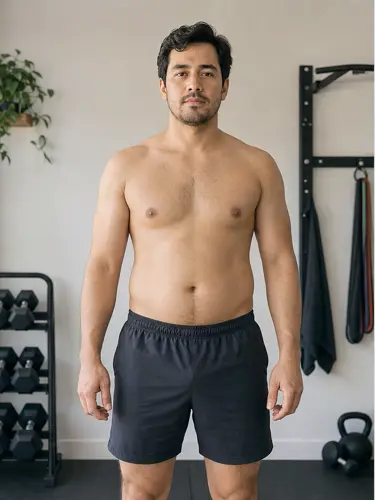
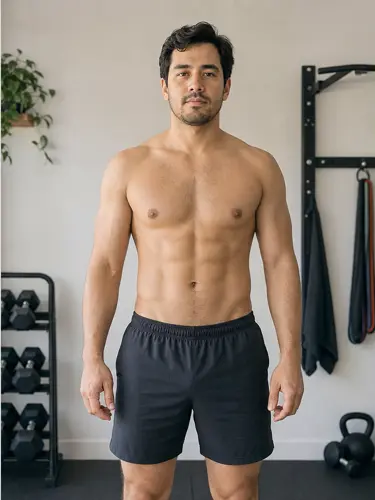
10 Minutes Is Enough: Why Short Ab Workouts Out-Perform the Hour-Long Grind
You have a misconception about abs. It’s reinforced by every fitness influencer doing 50-minute core routines, but the science doesn’t support it. You don’t need an hour on the floor to carve definition — in fact, you’re probably wasting time.
The real pattern: people who get visible abs do it through a combination of diet, full-body training, and yes, targeted core work. But that targeted core work? Ten focused minutes beats thirty unfocused ones almost every time.
Why Abs Respond to Consistency, Not Duration
Your abdominal muscles are skeletal muscles like any other. They don’t have some magic property that demands hours per week. A bicep needs maybe 10–15 sets per week for growth. Your abs, which are smaller and can handle more frequency, respond to somewhere in that ballpark — maybe slightly more because you can train them more often without significant recovery debt.
The problem with long workouts isn’t the time investment; it’s usually the intensity. By minute 30 of a 50-minute routine, you’re doing reps on fumes. Fatigue sets in, form suffers, and you’re just moving through motion. Ten minutes of genuine work — where each rep has tension and intention — is neurologically and mechanically superior.
The Intensity-to-Fatigue Trade-Off
This is where short workouts win. You can’t sustain maximal or near-maximal effort for an hour. Your nervous system doesn’t permit it. That’s not a limitation; it’s physics. A ten-minute session at 80–85% effort hits your abs harder than an hour at 40–50%. Muscle damage, mechanical tension, and metabolic stress all depend on intensity, not duration.
When you pair a short, hard core workout with resistance training for the rest of your body (which also recruits your anterior core heavily), you’re getting everything you need.
The Deception of Time-Under-Tension
You’ve heard the phrase: muscle grows under tension. True. But there’s a misreading lurking there. People assume that means *longer* under tension is always better. It’s not. There’s a dose-response relationship, and it plateaus. Beyond a certain point, more time under tension produces diminishing returns and mostly just fatigues your joints and nervous system without adding stimulus.
Ten minutes of planks, weighted carries, and anti-rotation work will build a stronger core faster than an hour of flutter kicks and inefficient ab crunches.
What a Real Ten-Minute Core Session Looks Like
An efficient short session targets multiple planes of motion: flexion (crunching), anti-extension (planks), anti-rotation (Pallof press, dead bugs), and lateral flexion (side planks or cable chops). Four movements, two to three sets each, with minimal rest between exercises. Intensity matters — if you can talk easily, the load is too light.
This approach works because it respects the actual physiology of muscle growth. Your abs are there to stabilize your spine and control movement. When you train them against meaningful resistance or in challenging positions, they adapt. The 10-minute window is plenty.
How It Fits Into Your Week
Three to four of these short sessions per week, combined with compound resistance training and a calorie deficit, will produce visible abs faster than anything else. You’re not replacing general conditioning or full-body strength work — you’re complementing it with a targeted stimulus that’s efficient enough to repeat frequently without eating into recovery.
Chloe Ting’s approach here demonstrates exactly this principle: short, specific movements that challenge the core without requiring an equipment-heavy setup or a time commitment that feels insurmountable. The workout uses bodyweight leverage and positioning to create real demand on the abdominal muscles in ten minutes. She strips away the noise and focuses on the work itself. Watch it, pay attention to the tension she demonstrates in each rep, and notice how the brevity doesn’t diminish the effectiveness — it amplifies it.
Leave a Reply