
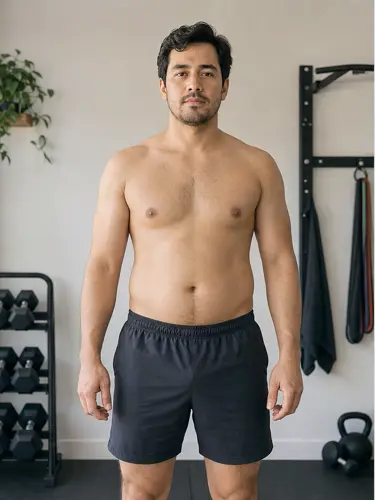

Most people assume ab workouts need to be long to be effective. They’re wrong. The problem isn’t duration—it’s intensity and movement selection. A well-designed 7-minute ab session can produce measurable results in a fraction of the time you’re probably spending.
Here’s what changes when you stop chasing Instagram-style 20-minute ab routines and start thinking like someone who wants actual results.
The Time-Intensity Trade-Off
Your abs respond to the same principles as any other muscle: progressive overload, tension, and consistency. When you pack high-tension exercises into a short window, you’re creating a metabolic demand that shorter, low-intensity sessions can’t match. A 7-minute session of compound core movements creates more muscle-building stimulus than 20 minutes of isolation work done lazily.
The key is eliminating movement overlap. Most ab routines include variations that hit the same fiber angles—different crunches, different leg raises, the same muscles working the same way. When your time is limited, you build a protocol around movement diversity instead of movement volume. This matters more for results than almost anything else.
Movement Patterns That Actually Build Abs
If you want visible abs, you need to train three distinct core functions: flexion (curling forward), anti-rotation (resisting twisting forces), and anti-extension (resisting backward bending). Most people hit flexion hard and ignore the other two. That’s why their cores look flat or undefined even when they’re lean.
A quality short session covers all three. You might do one compound flexion movement, one rotational hold or movement, and one anti-extension drill. This takes maybe 6-7 minutes but addresses the full picture of core strength and muscle development. Your abs respond faster because they’re being worked in complete context, not in isolation from the other core functions.
Why Short, Consistent Workouts Beat Long, Inconsistent Ones
The biggest advantage of 7-minute abs is adherence. You can do it daily or 5x per week without overtraining or burnout. Most people abandon longer routines because life gets in the way. A 7-minute workout fits before your shower, between meetings, or at the end of your regular training—no excuses, no skipped days.
Consistency is what drives adaptation. Your nervous system adapts faster to daily stimulus at moderate intensity than it does to sporadic high-volume work. You’ll feel the difference in core stability and ab definition within 2-3 weeks of consistent short sessions.
The Role of Bodyweight Progression
You don’t need weights to build impressive abs. Bodyweight movements allow you to progress through position changes and movement variations. Start with easier positions (knees bent) and work toward harder ones (legs extended, loaded holds). As your leverage changes, the muscle tension increases without needing external load. This progression framework fits perfectly into a short session because you can nail the hard variations before fatigue drops your quality.
The catch: you have to actually progress. Doing the same movements at the same difficulty doesn’t build muscle. Track your variations and push toward harder positions or more reps each week. That’s where the growth happens.
See What This Looks Like
This video breaks down a specific 7-minute protocol that hits the full core architecture. Watch how the movements are sequenced, why certain exercises come in certain order, and how positioning changes the difficulty without needing equipment. The principles here apply whether you’re training in your living room or have a full gym.
Short training doesn’t mean weak results. It means smarter movement selection and the kind of consistency that actually produces visible abs.
Leave a Reply