
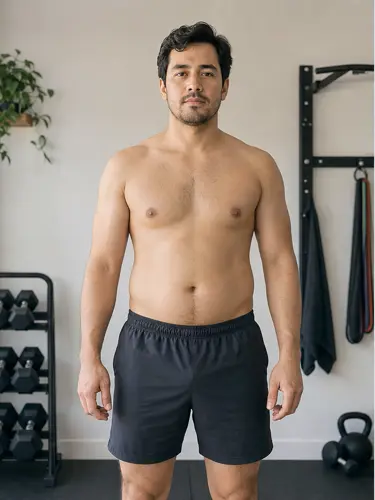

For decades, anyone who asked about spot reduction got the same answer: no, you can’t choose where you lose fat. Your body burns it from wherever it wants, and no amount of crunches will change that. The science seemed settled.
Except it turns out the science wasn’t quite as settled as everyone assumed. A handful of studies — including one from 2023 that controlled for calorie burn more carefully than anything before it — suggest the picture is more complicated. You probably can’t just do situps and watch your belly shrink. But there’s a specific combination that seems to make a real difference in where fat comes off first. Here’s what’s actually going on.
Why Belly Fat Is So Hard to Move in the First Place
Before the research makes sense, it helps to understand why belly fat feels so stubborn compared to, say, fat on your arms or face. Fat loss requires two steps: first your body has to mobilize the fat — release it from the fat cell — and then it has to actually burn it for fuel. Most people think of these as one process, but they’re not, and that distinction matters here.
When you exercise, blood flow increases dramatically to the muscles you’re working and the tissue surrounding them. Your quads, hamstrings, and glutes get enormous blood flow every time you run, walk, or squat — they’re large muscles you use constantly. Your abs, on the other hand, are rarely the primary mover in most workouts, and the fat sitting over them doesn’t get the same blood flow response. Less blood flow means less mobilization opportunity. The belly fat gets mobilized less, burned less, and sticks around longer than fat in areas you train more aggressively.
What the 2023 Study Actually Found
Researchers split 16 overweight men into two groups and ran them through a 10-week program. Both groups exercised four days a week and — this is the important part — burned the same number of calories each session. The control group did 45 minutes on the treadmill. The spot reduction group did 27 minutes on the treadmill plus two ab exercises: torso rotations and machine crunches.
After 10 weeks, both groups lost roughly the same amount of total body fat. But the ab-training group lost about two and a half times more fat specifically from the belly area. The treadmill-only group, meanwhile, lost more fat from their legs — the muscle group they were working most.
That leg finding is actually what makes the result credible. It wasn’t just that the ab group lost more belly fat — the pattern made mechanistic sense. Each group lost more fat near what they were training. Prior studies that failed to find spot reduction effects often didn’t control for total calories burned, so you couldn’t tell if one group simply did more work overall. This one matched calorie expenditure and still saw the regional effect.
The Mechanism: Mobilize First, Then Burn
The working theory is that ab exercises increase blood flow to the belly region, which mobilizes the fat there. But mobilization alone doesn’t burn fat — you need to then actually oxidize it. That’s where cardio comes in. Do the ab work to mobilize, then use cardio to burn the mobilized fat as fuel before your body redeposits it.
This also explains why thousands of crunches alone don’t produce results. Earlier studies that had people do 5,000 situps over a month found no meaningful spot reduction — probably because they mobilized belly fat without pairing it with enough cardio to actually use it up. The order and combination matter, not just the ab work in isolation.
For the approach to work, the cardio needs to be intense enough to actually burn fat as fuel rather than just glucose. A slow three-minute walk after your ab set won’t do it. Low-to-moderate steady-state cardio for 20–30 minutes seems to be the sweet spot based on what the studies used.
Which Ab Exercises Actually Work for This
Not all ab exercises appear equal here. Planks, for all their popularity, probably don’t drive much blood flow to the belly region because they’re primarily an isometric stability exercise — there’s little dynamic movement around the midsection. The studies that showed spot reduction effects used exercises with actual flexion and rotation: crunches and torso rotations.
That doesn’t mean planks are useless — they build real core stability. But if your goal is to drive blood flow to the belly and potentially enhance regional fat loss, loaded dynamic movements are the better choice. Weighted crunches, cable crunches, machine crunches, and rotational movements hit the rectus abdominis and obliques in ways that isometric holds don’t.
There’s also a muscle-building argument for weighted ab work that exists completely separately from the spot reduction question. The abs respond to progressive overload like any other muscle. Train them with resistance consistently, and they grow — which makes them more visible even at the same body fat percentage. Most people never add load to their ab training, which is why their abs stay flat despite years of planks and bodyweight crunches.
What This Doesn’t Change
The spot reduction research is genuinely interesting, but it doesn’t upend the fundamentals. You still need a calorie deficit to lose fat at all. The regional effect seems to work within the context of overall fat loss — it doesn’t appear capable of melting belly fat while you’re in a calorie surplus. Think of it as a way to nudge where fat comes off first, not a way to bypass the basics entirely.
The studies also have real limitations: small sample sizes, short durations, and the 2023 study didn’t control for nutrition — though both groups lost similar total fat, which suggests the regional difference wasn’t just a calorie artifact. More research is coming, and the picture will get clearer. For now, the practical takeaway is fairly low-risk: add weighted ab work followed by 20–30 minutes of steady cardio to your routine, and you may be tilting fat loss toward your midsection. Even if the effect is smaller than the studies suggest, you’re building a stronger core and burning more calories either way.
Jeremy Ethier digs into this research in detail — including the conversation with Dr. Bill Campbell, who runs a fat loss lab at the University of South Florida and was initially skeptical of spot reduction before seeing the data. It’s worth watching to understand the nuance of what the studies can and can’t tell us.
Get your diet locked in first. Train in a deficit. Then use this approach to put some pressure on the belly specifically.
Leave a Reply