
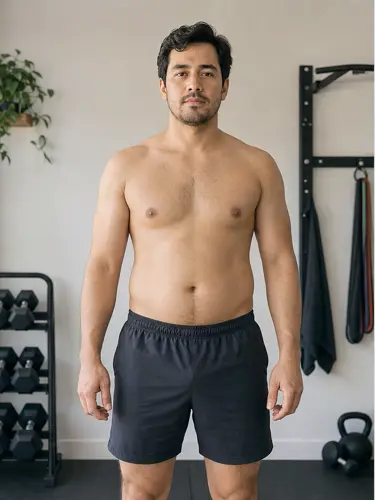

You’ve heard it a thousand times: “I don’t have time for a workout.” But what if the limiting factor wasn’t time at all? What if it was the wrong type of movement?
Most people think belly fat responds to abdominal crunches and long cardio sessions. In reality, the fastest visual changes come from movements that engage your entire core, create metabolic demand, and actually train the deep stabilizer muscles that give your midsection shape.
Why Pilates Actually Works for Belly Fat
Pilates isn’t a trendy fitness gimmick—it’s a system built on controlled movement patterns that force your deep abdominal muscles to work constantly. Unlike a crunch, which is a brief explosive movement, Pilates exercises maintain tension throughout the entire range of motion. This sustained engagement does three things your typical ab workout misses.
First, it teaches your core to stabilize under load. Your rectus abdominis (the six-pack muscle) gets attention, but your transverse abdominis—the deepest layer—is what actually pulls your stomach inward and creates the visible flat appearance. Pilates trains this intentionally. When your deep core is strong, your posture improves automatically, and better posture alone makes your abs look more defined.
Second, Pilates workouts spike your heart rate without the impact of running. A 6-minute intense Pilates routine can create a metabolic demand similar to 20 minutes of moderate cardio, but with far less wear on your knees and joints. Your body has to expend energy during the workout and continues burning calories during recovery—the metabolic echo that makes short, intense workouts so effective for fat loss.
Third, Pilates forces precision. You can’t phone it in on a Pilates reformer or a mat routine the way you might coast through a set of crunches. Each movement demands your attention, which means higher muscle recruitment and less wasted effort. That precision is what separates people who “do workouts” from people who actually get results.
The 14-Day Challenge Structure
Consistency beats intensity in real life. A 6-minute workout you do every single day will outperform an hour-long session you do sporadically. The 14-day structure works because it’s short enough to protect against burnout but long enough to build the neural adaptations that make movement feel easier. By day 14, your nervous system has learned the movement patterns, your core has grown stronger, and you’ve built the habit that makes the next 14 days automatic.
The other advantage: short daily workouts prevent soreness from interfering with daily life. You’re not walking around unable to sit down or struggling to get out of bed. Instead, you’re accumulating work in small, manageable doses—and the cumulative effect on body composition outweighs the single aggressive session most people attempt once and then abandon.
Why Deep Core Strength Changes How Your Abs Look
A lot of people have abs under the fat but they can’t see them because their core isn’t strong enough to pull the stomach in. When your deep core is weak, your abdominal wall protrudes slightly, even at low body fat levels. The reverse is also true: when your transverse abdominis is strong enough to maintain tension throughout the day, your stomach naturally pulls inward. Pilates directly targets this, which is why people often see visible changes in midsection appearance after just a few weeks—sometimes before significant weight changes occur.
Why You Should Prioritize This Over More Cardio
Adding another 30 minutes to your treadmill time won’t accelerate belly fat loss if your core isn’t strong. Your body will simply adapt to the cardio and plateau. But adding targeted core work that you’ve never done before? That’s a genuine stimulus that forces adaptation. Pilates provides both the core strength training and the cardiovascular demand in one efficient package.
Lilly Sabri’s 6-minute Pilates workout is exactly this type of work. She’s a chartered physiotherapist, which matters—her routines are built on proper biomechanics and core engagement principles, not just movement fads. The video walks you through each position, showing you how to feel the right muscles working and how to breathe through the hard parts. Watch it, complete the challenge, and notice what changes in your posture and midsection appearance after two weeks of daily practice.
Leave a Reply