
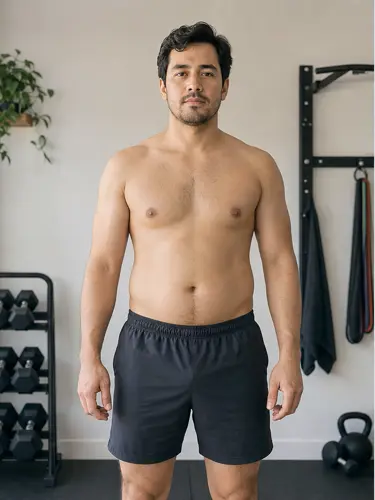
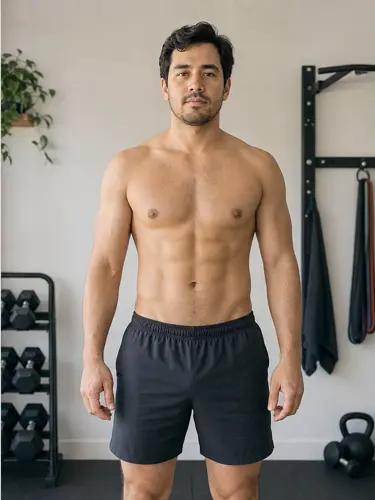
You’ve probably heard that crunches build abs. They don’t. In fact, most people who obsess over ab isolation exercises end up frustrated—they do hundreds of crunches and see almost nothing. The reason is mechanical: crunches move through only one plane of motion, they train the rectus abdominis in isolation, and they miss the deep core stabilizers that actually create visible, sculpted abs.
The shift to standing core work changes this equation entirely. When you work your core from a standing position, your body stops cheating. You can’t brace ineffectively. You can’t use momentum. Gravity and stability demands mean your core has to engage fully, and the range of muscles activated expands dramatically.
Why Standing Core Work Builds Better Abs Than Traditional Ab Isolation
The core isn’t one muscle—it’s a system. Your rectus abdominis (the six-pack muscle) is just the front layer. Beneath it sits the transverse abdominis, the deepest stabilizer. On the sides sit the obliques. When you do crunches lying down, you activate maybe 40% of that system. Standing exercises demand the whole thing.
Standing pilates specifically uses controlled breathing, precise positioning, and isometric holds to recruit fibers that floor exercises miss. When you’re upright, your core has to resist gravity in multiple planes simultaneously. Your posture, your spine stability, and your entire postural chain get trained. That’s not a bonus—that’s the point. Strong posture alone makes abs visible, even before you drop body fat.
Research on core training consistently shows that exercises emphasizing core bracing and stability produce better real-world outcomes than movements emphasizing range of motion. If your core’s job is to stabilize your spine during daily movement, training it to stabilize makes far more sense than training it to crunch.
The 12-Minute Protocol That Works
Most people fail at core training because they treat it as optional—a 2-minute afterthought at the end of their workout. The research says that’s exactly backwards. Dedicated core work, done consistently, drives results faster than sporadic training squeezed in whenever you remember.
Twelve minutes is the sweet spot. It’s enough time to work your core through multiple planes of motion, challenge your stability in different positions, and create a training stimulus without burning out. Done daily, or five to six times per week, this amount of targeted work outpaces the hour-long, low-intensity routines most people default to. The key difference is intensity and intent. Every rep matters because the range is limited and the movement is precise.
The combination of standing work and pilates breathing creates another advantage: you’re building endurance in your core’s stabilizing muscles, not just size. Endurance keeps your posture upright all day. Endurance is what prevents your lower back from aching when you sit. Endurance is what makes abs look sculpted when you’re lean.
What to Expect From This Approach
If you’re coming from traditional ab circuits—endless crunches, cable crunches, machine work—switching to standing pilates core work will feel strange at first. It feels easier because you’re not exhausting a single muscle group. What’s actually happening is you’re distributing load across a larger system, so no one muscle screams, but everything is working.
That distributed effort is why it works. Your core gets stronger without the postural breakdown that traditional ab isolation sometimes creates. Your posture improves. Your lower back stops hurting. And after four to six weeks of consistent work, the visual definition improves noticeably because strong core muscles actually look like something when you’re lean.
If you’re already lean, standing core work tightens and defines your midsection faster than you’d expect. If you’re still carrying body fat, the work here is prerequisite work—get your core strong and stable first, then cut.
Leave a Reply