
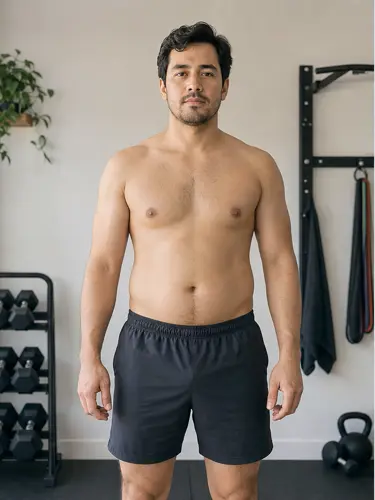
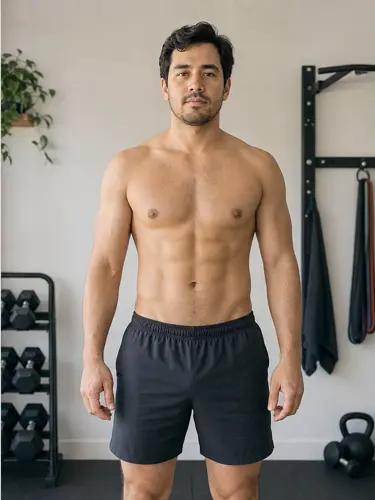
An AI fitness image is a generated illustration based on an input photo and instructions. It can reflect a visual preference. It does not measure future muscle gain, fat loss or the appearance your body will have.
What the technology is actually doing
These tools are built on image-editing models — the same family of AI that can change the season in a landscape photo or swap the colour of a car. You give the model your photo plus a written instruction describing the change, and it regenerates the image with that change applied while trying to preserve everything you did not ask to change.
That last part is the hard bit, and it is where most of the engineering effort goes. A model asked to make someone leaner will happily also make them younger, taller, tanner, and give them a slightly different nose, because all of those things co-occur with “fitness photo” in its training data. Getting a result that is unmistakably you, only leaner, means constraining the model hard on identity, skin tone, pose, clothing and lighting — and then checking the output to confirm it actually complied.
The four ways these tools fail
If you try a few of them, you will run into all four of these. They are worth naming because they are the checklist for judging any result you get.
- The face drifts. The body looks great and the person in the photo is a stranger. This is the most common failure and the most disqualifying — the entire point is seeing yourself.
- It overshoots into bodybuilder. You asked to see yourself lean and got back someone with 40 extra pounds of muscle, comic-book shoulders and visible veins. Not motivating, just silly.
- Nothing changes. The opposite problem. Models tend to hedge on heavier starting photos, returning something almost identical to the input. If you cannot tell the before from the after, the tool failed.
- It adds a tan and an airbrush. Suddenly you are three shades darker with oiled, poreless skin. This reads as fake instantly and quietly changes your skin tone, which is its own problem.
What to look for in a good one
Identity preservation above everything. Put your own photo in and check the face first, before you look at the abs. If it is not you, nothing else matters.
Intensity control. “Slightly leaner” and “as lean as I could realistically get” are different pictures and you should be able to ask for either. A tool with one setting is guessing at what you want.
Look for an explicit label when an image is created by AI. A realistic-looking illustration cannot predict a future physical result.
Clear terms on your photo. You are uploading a shirtless picture of yourself. Read what happens to it. Whether it is stored, for how long, and whether you can delete it are reasonable things to know before you tap upload.
A free try. There is no reason to pay before seeing one result on your own photo. The failure modes above are obvious in a single generation.
Is any of this actually useful, or is it a toy?
Fair question. The image does not burn a single calorie, and anyone selling it as a shortcut is lying to you.
Some people enjoy using a fictional visual reference alongside a practical goal. Real progress is measured through actual activities and observations.
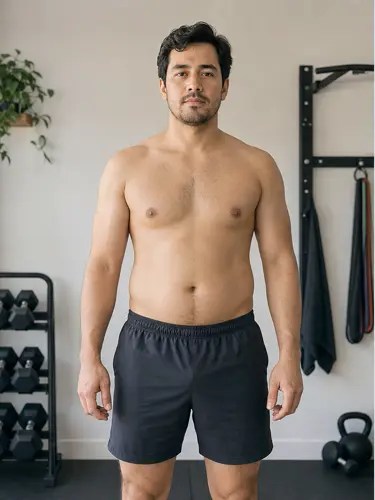
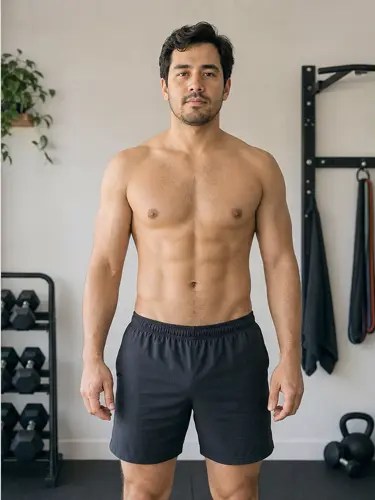
A training log can be kept alongside an illustration. The calculator demonstrates a hypothetical scenario using its inputs; it does not forecast a real outcome. Explore the calculator.
Try it on your own photo
Abs By AI can use a photo and your preferences to generate a fitness illustration. Lighting, anatomy and other details may differ from your original photo.
Example images are fictional AI illustrations, not guarantees of results. Nothing here is medical advice — talk to your doctor before starting a diet or exercise program.
Leave a Reply